If you have Fitzpatrick type IV, V, or VI skin and you are considering laser hair removal in London, the most important conversation you will ever have with a clinic happens before you book. Most chain clinics rely on Alexandrite-only or 808nm-only platforms. Those wavelengths were never designed for melanin-rich skin. The right clinic uses the 1064nm wavelength, performs a proper Fitzpatrick assessment, and adjusts settings at every single visit. This guide walks you through the five questions that separate a clinic worth your time from one you should walk away from.
Why the laser technology matters more than the brand of clinic
Laser hair removal works by firing a wavelength of light that is absorbed by melanin in the hair follicle. The heat destroys the follicle, the hair stops growing. Simple in principle. The problem is that the same melanin pigment also lives in your skin, especially in darker Fitzpatrick types. If the wavelength your clinic uses cannot tell the difference between melanin in the follicle and melanin in the surrounding skin, your skin absorbs the heat too. That causes pigmentation changes, blistering, and in the worst case, permanent scarring.
The chain-clinic answer to this problem is to turn the laser settings down to a safe level. That removes the burn risk. It also removes the hair-removal effect. Patients with darker skin walk out after seven sessions wondering why they paid £900 for nothing visible. The hair is still there because the laser was, in clinical effect, switched off.
The correct answer is to use a laser that is designed for the job. The 1064nm wavelength passes through the upper layers of melanin-rich skin and targets the follicle directly. It does not need to be turned down to ineffective levels, because melanin-rich skin absorbs less of it in the first place.
The first question you ask a clinic should always be about the laser technology, not the price.
The Fitzpatrick scale and why it tells you everything
The Fitzpatrick scale is a clinical classification of skin response to sun exposure, from I (always burns, never tans) through VI (deeply pigmented, never burns). It was developed in 1975 by Thomas Fitzpatrick, a Harvard dermatologist, originally to predict patient response to ultraviolet phototherapy. Today it is the standard reference for any clinician choosing laser settings for an individual patient.
The six categories at a glance
- Type I. Pale white skin, often with freckles. Always burns, never tans. Common in Northern European and Celtic backgrounds.
- Type II. Fair skin. Burns easily, tans minimally. Common across Northern Europe.
- Type III. Light brown skin. Sometimes burns, gradually tans. Common in Southern European backgrounds.
- Type IV. Moderate brown skin. Rarely burns, tans well. Common in Mediterranean, Middle Eastern, and South Asian backgrounds.
- Type V. Dark brown skin. Very rarely burns, tans heavily. Common in South Asian, Middle Eastern, and Latin American backgrounds.
- Type VI. Deeply pigmented black skin. Never burns. Common in African and African-Caribbean backgrounds.
Every laser device on the market has a manufacturer-stated safe range across Fitzpatrick types. Most Alexandrite lasers are rated safely for types I to III, sometimes IV with reduced settings. Single-wavelength 808nm diode lasers are often rated for I to IV, sometimes V at reduced settings. Platforms with a 1064nm wavelength, Nd:YAG or diode, are generally the ones rated across I to VI. Ask to see the manufacturer's rating for the exact device.
If a clinic does not assess your Fitzpatrick type as part of the booking process, the clinic is not in a position to choose the right laser settings for your skin. Walk away.
The 1064nm wavelength explained
Nd:YAG stands for Neodymium-doped Yttrium Aluminium Garnet, the crystal that produces the laser beam. The "1064nm" refers to the wavelength of light it emits, which sits in the near-infrared part of the spectrum. Diode lasers can also emit 1064nm, and ours does. What matters for your skin is the wavelength. Two physical properties make 1064nm the established standard for treating Skin of Colour:
- Deeper skin penetration. The 1064nm wavelength passes through the upper layers of the epidermis and dermis without being heavily absorbed. The energy reaches the follicle bulb where the hair grows from.
- Lower melanin absorption in the epidermis. Compared to shorter wavelengths like 755nm (Alexandrite) or 808nm, the longer 1064nm light is less attracted to the melanin in the upper skin layers. That reduces the risk of pigmentation changes and burns.
The clinical literature on this has been settled for more than a decade. Studies including Moftah et al. (2022) in the Journal of Dermatological Treatment support the 1064nm Nd:YAG laser for higher Fitzpatrick types. Those trials used Nd:YAG lasers; our diode laser emits the same 1064nm wavelength. DOI 10.1080/09546634.2021.1914311
At Melatone™ Skin Clinic we run the SMARTDiode MD, a triple-wavelength diode laser that delivers 1064nm, 808nm and 755nm in a single device. It is not an Nd:YAG laser: it produces the same 1064nm wavelength with diode technology. Your clinician selects the appropriate wavelength at your Fitzpatrick assessment. We use 755nm or 808nm for lighter Fitzpatrick types (where they are clinically efficient), and 1064nm for Fitzpatrick IV through VI. One platform, the right wavelength for every skin.
Five questions to ask any clinic before booking
Save this list. Send it to a clinic by WhatsApp or email before you make any commitment. The answers tell you everything.
We answer all five for our own clinic, with the wavelength, the patch test timing and the named practitioner, on our dark skin laser page: how do I check whether a laser clinic is suitable for my skin tone before booking?
1. What wavelength laser do you use for my Fitzpatrick type?
A correct answer specifies a wavelength in nanometres (typically 1064nm for higher Fitzpatrick types, from an Nd:YAG or a diode laser) and explains why it suits your skin. A wrong answer is the device brand name with no wavelength detail, or "all our lasers are safe for all skin tones" without qualification.
2. Will you perform a Fitzpatrick assessment as part of my patch test?
Yes is the only acceptable answer. The assessment is a short clinical conversation about your skin response to sun, your ethnic background, and a visual check. If the clinic skips it or "just looks at you and decides", they are guessing.
3. Who delivers the laser treatment, and what is their qualification?
The right answer is a named practitioner with a recognised credential. In the UK, VTCT Level 4 in Laser and IPL is the standard. The wrong answer is "one of our therapists" with no specific qualification.
4. How many sessions does a typical Fitzpatrick V or VI patient need on your platform?
An honest answer is 6 to 10 sessions across the course, possibly with longer intervals between sessions for higher Fitzpatrick types. A clinic that promises a fixed number without seeing your skin, or insists everyone needs exactly six, is not engaging with the clinical reality of your case.
5. What is your protocol if I develop pigmentation changes after a session?
A competent clinic has an answer ready, usually involving immediate cessation of treatment, a topical regimen, photography of the affected area, and a follow-up clinical assessment within seven days. A clinic that has not thought through this question is not prepared to manage it when it happens.
What we would actually do
At Melatone, every patch test starts with a Fitzpatrick conversation, then a visual check, then the test fire at clinician-selected settings on your specific skin. We photograph the site, give you 48 hours of self-monitoring instructions, and either book you in or recommend an adjusted approach based on what we see. We will not deliver a paid session without that sequence.
What a proper patch test should look like
At Melatone the patch test appointment takes about 30 minutes, depending on your concerns and questions. Anything much quicker is missing something. Here is the correct sequence:
- Consultation conversation covering your medical history, current medications (some, including certain antibiotics and acne treatments, affect laser candidacy), sun exposure in the past four weeks, and any previous laser treatment.
- Fitzpatrick assessment as described above.
- Skin preparation on the test area, usually a small patch on the lower jaw or upper inner thigh.
- Test firing at clinician-selected settings appropriate to your Fitzpatrick type. You will feel a series of warm pulses, similar to an elastic band snap.
- Post-test photography documenting the test area for comparison at 48 hours.
- Self-monitoring instructions covering what is normal (mild redness, slight follicular swelling) and what is not (blistering, hyperpigmentation, sustained pain).
You should leave the clinic with a follow-up plan and an emergency contact number, in writing or via WhatsApp. If the clinic offers no follow-up channel, the patch test is decoration not diligence.
Our full guide, your laser patch test, explained, covers the 48 hour wait and what a normal reaction looks like at 24 to 72 hours, written separately for light skin and for brown and black skin, where redness is often not what you will see.
Six red flags that mean walk away
- The clinic markets a single discounted price across all skin tones. Wavelength selection should change the consultation, even if the headline price does not.
- The patch test is bundled into a "free consultation" without a discrete clinical fee. Free patch tests are a marketing hook, not a clinical event. A £10 to £20 patch test fee aligns the clinic's incentive with your safety.
- The clinic refers to "all skin types welcome" without specifying which laser device they use for darker tones. The phrase is meaningless without a wavelength.
- The clinician cannot name their qualification or year of training. Laser specialism is a regulated skill in the UK. Practitioners should be able to state their certification immediately.
- They book your full course before the patch test results come back. Course pricing should be locked in only after a successful patch test clears, not before.
- The aftercare instructions are verbal only. Written aftercare, with a follow-up contact route, is the minimum standard. Verbal-only aftercare is what gets forgotten in the Uber home.
If you take one thing from this article
Wavelength is not a marketing detail. It is the entire clinical question for laser hair removal on melanin-rich skin. Ask the question. If a clinic cannot answer it precisely, the clinic is not the right place for your skin.
Why Melatone built this differently
Melatone Skin Clinic was set up in Battersea around the principle that aesthetic care should serve every skin tone with the same level of clinical rigour. Our laser platform includes the 1064nm wavelength because most of our patients have Fitzpatrick types IV through VI. Our Laser Lead, Catia, is VTCT Level 4 certified in Laser and IPL with NHS background. Every patient receives a Fitzpatrick assessment at patch test. Every patient receives written aftercare. Every patient gets a direct WhatsApp number for any concern between sessions.
If you have spent time on the wrong clinic and got the wrong outcome, you already know how rare this kind of attention is. We built the practice on the assumption that it should not be rare.
Important information
Individual results vary by skin type, hair type, hormonal status, and the area treated. The reduction percentages cited in this article reference published data on Fitzpatrick IV-VI populations and may not match your personal outcome. Laser hair removal is a medical aesthetic procedure. Patch test and full Fitzpatrick assessment is required before any treatment, and settings are confirmed at each session. If your skin reacts adversely, treatment is stopped and reviewed by our supervising clinician.
Ready to ask the questions
Book a £10 patch test, or message us first.
If anything in this article changes how you think about your laser options, the next step is a Fitzpatrick assessment with Catia. Patch test is £10 (deducted from your course cost). WhatsApp us first if you want to ask one of the five questions before booking.
About the author
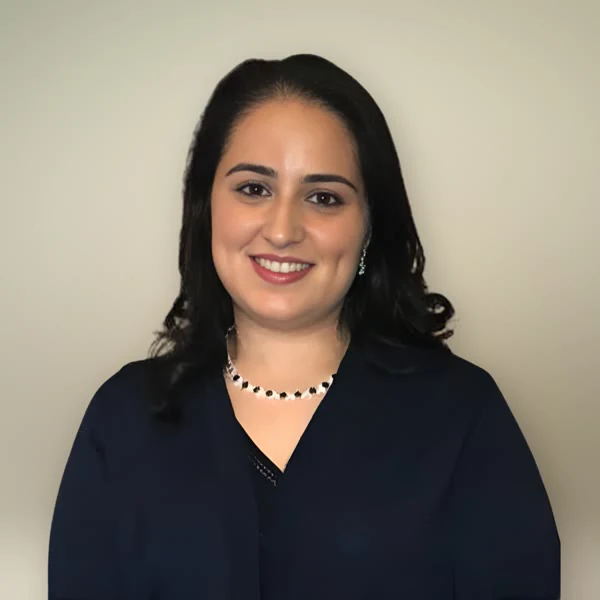
Catia Zaki
Clinic Manager, Hydrofacial & Laser Lead · VTCT Level 4 certified in Laser and IPL
Catia delivers all laser hair removal at Melatone Skin Clinic in Battersea, plus HydroMED Pro facials and skin assessments. Six years of NHS clinical background, ten years in clinic management. Every laser appointment begins with her Fitzpatrick assessment.
Frequently asked
Is laser hair removal safe for darker skin tones?
Yes, when the correct wavelength is used. The 1064nm wavelength is the established standard for treating Fitzpatrick types IV, V, and VI. Platforms that only offer Alexandrite (755nm) or 808nm carry higher pigmentation and burn risks for darker skin. Always confirm the wavelength your clinic uses before booking.
Why do many London clinics not treat darker skin tones properly?
Many chain clinics rely on Alexandrite-only or 808nm-only platforms that are not optimised for higher Fitzpatrick types. Rather than turning away clients, they often offer treatment at safer-but-less-effective settings, which leads to slow results, hyperpigmentation, or no result at all. A clinic with a 1064nm wavelength, from an Nd:YAG or a diode laser, does not have this constraint.
How is my skin tone assessed before laser hair removal?
Through a Fitzpatrick assessment, ideally combined with a small patch test on the treatment area. The Fitzpatrick scale runs from I (always burns, never tans) through VI (deeply pigmented, never burns). Your clinician should ask about your skin response to sun, your ethnic background, and recent UV exposure, then confirm with a visual assessment.
What is a Fitzpatrick patch test and how long does it take?
A patch test fires the laser at low settings on a small area of skin. At Melatone the appointment takes about 30 minutes. The clinic should wait at least 24 hours before clearing you for full treatment; at Melatone the standard is 48. Any clinic that books you straight into a full session without a patch test is cutting a corner that exists for your safety.
How much does laser hair removal cost for Skin of Colour patients in London?
Pricing should be the same as for any other Fitzpatrick type. The wavelength used differs but the clinical work is comparable. At Melatone Skin Clinic in Battersea, the patch test is £10 (deducted from your course cost) and standard pricing applies across all Fitzpatrick types. Course of 7. See current pricing on the laser site.
Related reading
Skin of Colour at home
At-home OTC routine for pigmentation in Skin of Colour.
The cycle, explained
Why a course of 7? The hair growth cycle, explained.
Credentials
What VTCT Level 4 actually means for your laser appointment.
Before your first session
Your laser patch test, explained.
Treatment page
Laser hair removal for dark skin in London